Categories
Magazine

The algorithm’s autograph

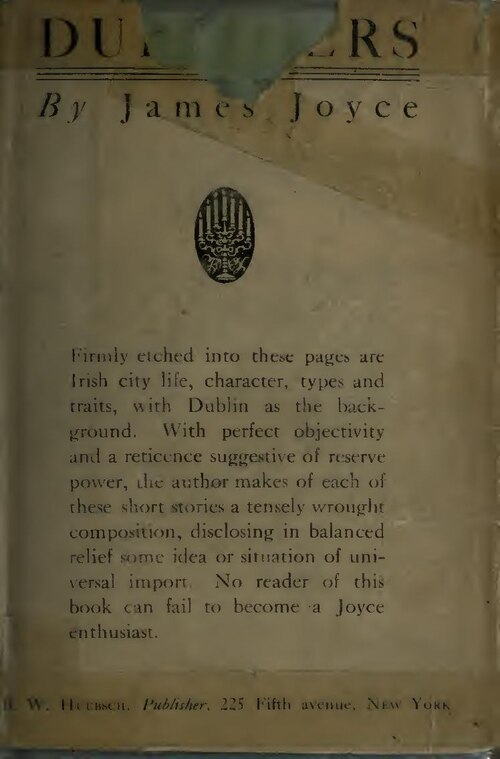
Blurb from the 1916 American edition of Dubliners. Courtesy: Wikimedia Commons.

The algorithm’s autograph

Saikat Majumdar
Writing is a form of artificial intelligence. That is pretty much what Socrates felt about the new technology of transcription, about which he was rather suspicious. Plato’s reconstructed teacher did not actually call it AI, of course. But he described writing in terms that mysteriously evoke the current reality and conversations around machine intelligence. Writing was, for Plato, an ‘invention’ that ‘will produce forgetfulness in the minds of those who learn to use it, because they will not practice their memory’. People’s ‘trust in writing, produced by external characters which are no part of themselves will discourage the use of their own memory within them’. This is gradually how we come to outsource our own human functions to external technology – a process, in today’s language, called ‘metacognitive laziness’. He almost sounds like one of today’s teachers, frustrated by the rampant use of AI, when he tells the writer that ‘you offer your pupils the appearance of wisdom, not true wisdom, for they will read many things without instruction and will therefore seem to know many things, when they are for the most part ignorant and hard to get along with, since they are not wise, but only appear wise’.
Most importantly, the silence of the written word precludes real-time interaction with a teacher physically present through active spoken dialogue. Writing, at best, can only be a feeble copy of the real thing, speech, where the true source of the words is present in real time. Hence, only an orally delivered speech or conversation comprises the original discourse, and has a greater philosophical and pedagogical value.
The privileging of speech over writing, Jacques Derrida has argued, marks Western philosophy as logocentric. It’s a profound argument that is difficult to grasp simply because it questions and seeks to uproot our fundamental assumptions about texts. All texts with linguistic content, Derrida seems to be saying, promise the presence of an author by conflating author with speaker and writing with the speaker’s message. Speech, according to this model, becomes synonymous with the original, with its implication that the speaker is actually present, and writing with the idea of the copy, since it cannot claim the real-time presence of the writer. Derrida has bigger worries as he tracks logocentrism – the notion of absolute Truth and language’s claim to reflect a stable reality, for instance. But a key concern for Derrida is the metaphysics of authorial presence, which implies a real person is speaking to us through language.
But there is also another lineage of modern authorship where the Author is divine and hence can never be present. In this tradition, the text is the subject of hermeneutic interpretation; that is, an attempt to understand what God might have meant, regardless of whether They offered Their words to a man atop a mountain or on a battlefield. Since no one can ever meet God or even affirm Their real presence, hermeneutic interpretation is endlessly delayed and unfulfilled. It is an unceasingly frustrated attempt to reconstruct meaning from words that are available but inadequate to conceiving a whole.
The secularisation of Europe’s scriptural hermeneutics, Edward Said has reminded us, is the foundation of modern humanities – philology, literary criticism, language-based study of all kind.[1] The absent source of meaning is no longer God but the amorphous and mercurial character of a literary symbol, the playfulness and equivocation of non-representational writing – anything that wreaks aesthetic violence on language and destroys its transparency as a medium of expression. Meaning becomes elusive again, and interpretation must search for it, just as the reading of scriptures once searched for the absent God.
Stephen Dedalus wants to fly his flag for both camps, and, consequently, commit to neither. Somewhere in The Portrait of an Artist as a Young Man, James Joyce’s famous autobiographical character demands that the author be like God in relation to their creation – present everywhere but visible nowhere. Omnipresent but invisible. This is not about the formal ascription of authorship, which, as Michel Foucault and others have reminded us, is hard to escape in modern times. Today it’s impossible not to have an authorial name on the title page, cover and the spine, and all the legal and moral copyright claims that go with that name. But Dedalus has something more ethereal in mind, whose tangible dimension manifests itself through style, and the less tangible but deeper form takes shape in the authorial worldview.
Where exactly is the author in the work if they are present everywhere but visible nowhere? This is a good moment to return to the Socratic understanding of writing as an artificial and disembodying technology. It is rather deliciously ironic that all these arguments take shape through conversations: Socrates with Phaedrus, Stephen with his buddies Lynch and Cranley. But yet again, the Greek exchange is fictionally reconstructed, and the Irish, fictionally represented – very likely drawn from Joyce’s real-life walks with his Dublin friends. In this, Stephen’s exchanges are Socratic in form and spirit – the speakers are with each other in real time.
But all hell might have broken loose if Socrates and Stephen were to talk to each other. Stephen, I daresay, would rather frustrate Socrates’ view of writing as a sad mimesis of speech.
It is not just that Stephen is a creature of the European Enlightenment and modernity, with his sensibilities shaped by print, and hence naturally immersed in a culture of writing. It’s really about how he leaves God the Writer hanging. Omnipresent but invisible. What would Socrates do with that? In speech, the speaker is very much visible, or at least certainly audible. Writing holds no material trace of the writer. It is an open and shut case of physical absence. Style and worldview play no part in this. Stephen is muddying the waters.
Perhaps Stephen and Socrates would have no quarrel at all. They are, in the end and in the beginning, speaking/writing about different things. But then, does Stephen really believe in the invisible omnipresence of the author? In asking this, I, too, play a presence-absence game: the real question is not about what Stephen believes but what his creator James Joyce does. What, in Joyce’s oeuvre, is the poetics of invisible omnipresence?
Artificial Intelligence would be very interested in this question. Ok, not ‘interested’ – they have no sentience, only sapience, an increasing amount of it as we speak – so let’s say they would be deeply ‘implicated’ in this matter. AI, it is clear, involves no authorial persona at all, being a simulation of the author-effect sustained by the multitudinous potentials of training data shaping Large Language Models (LLMs). In that sense, AI busts the cult of logocentrism. But that author-effect grows more and more convincing in its simulation with each passing day, as AI sapience grows more and more powerful. Sentience plays no role in this trajectory of increasing sapience – that is the nature of the beast called AI – but that’s a whole other discussion.
At present, AI-generated writing, particularly writing that seeks to be literary, is almost the exact reversal of the Dedalus dictum. It is visible absence, as opposed to invisible omnipresence. There is no real author (so much for Godlike presence), but plenty of signatures that make this absent author visible. Socrates has finally won the debate. See what happens when you move utterance from the body? It becomes fake, and worse, you can’t tell that it is.
Neither can, it seems, editors and publishers and jury-members of prestigious literary awards. Just about every week we hear of a book being withdrawn from the market, an author advance cancelled, upon the discovery of AI use by the writer, substantial and significant enough to discredit the author of ‘writing’ it. Enough awards have now been shamed for conferring glory to writing subsequently revealed as AI-generated. It is clear that certain kinds of stylistic, thematic, narrative signatures are popular with the literary zeitgeist that runs through the book industry and its citizens who have awarded these awards. These signatures are now visible enough to become algorithms that LLMs, trained on endless data drawn from what now seems to be just about every word ever written and spoken in the history of humanity, can identify and master quickly. The publishable, successful, and prizewinning book (most commonly a novel) is in danger of becoming an algorithmic formula. In the past, it appeared that only human editors, publishers, and certain writers were able to crack the formula. Now AI has done it too – when it comes to patterns, formulae, and algorithms, we already know, AI’s capacity of mastering them is way higher than those of puny humans than it’s even worth trying to enumerate.
Can a successful work of art or articulation of thought be identified through a formula or a pattern? The conventional wisdom in literary criticism is that popular genres tend to use the scaffoldings of certain narrative patterns. The detective novel, the romance, the action thriller – they need to follow certain structures of lack, mystery, thrill, fulfilment, puzzle, and solution. But even the genre of high tragedy, according to Aristotle, had to abide by the structures of hubris, hamartia, the great tragic fall, leading to the revelation and purgation of anagnorisis and catharsis. Perhaps the greatness of the tragedy hinged on the unique ways a tragic play embodied these structures. Even modern genres such as crime and spy thrillers have transcended the limitations of their structural scaffoldings by bending language and narrative in powerfully idiosyncratic ways, shaping novels such as those written by John le Carré and Graham Greene.
Such formulae and patterns do not belong to any particular author but to collective myths society erects from time to time. The signature of a particular author is something different, something more abstract but tangible all the same – you know it when you see it. It could have the sensory immediacy of a ‘style’ or the ineffable but pervasive reality of an ‘ethos’. Their presence tells us that writing is not such a poor copy of speech after all – it can be its own thing. That writing is more than a Socratic system of artificial intelligence. But can AI today emulate this authorial signature? The answer to that, I feel, holds the hint of whether the Socratic nightmare of all writing becoming an artificial system – of, in terms of our current reality, all forms of literature being produced by machine intelligence – will come true.
Can AI strike the Dedalusian sweet spot between authorial omnipresence and invisibility? What does it even look like? How does Joyce practice it himself? In Ulysses, authorial invisibility takes the shape of radically different streams of consciousness attached to the three main characters: the flowing, elevated, literary style of Stephen Dedalus, the choppy, staccato viscerality of Leopold Bloom, and finally, the breathlessly spontaneous sensual style of Molly Bloom. The omnipresent author organizes it all but dissolves his own visibility between the distinctive voices of these three. Style and ethos come closer together in the paralysed worldview of Dubliners that holds the boy in the early stories in the same trajectory of failed bildung as it does Gabriel Conroy of ‘The Dead’, stringing together depressed middle-aged men and women in between – Little Chandler, Farrington, Maria. If you ask, AI will brave all of it: on my prompt to write a passage in the ‘style of James Joyce’, Google Gemini offered a choice between what it called ‘the structured prose of Dubliners’, the ‘stream-of-consciousness of Ulysses’, and the ‘wordplay’ of Finnegans Wake.
It gave me all three when I asked for it. To me, the riverrun word-soundplay of the Finnegans Wake-styled passage and the sensory, staccato, short sentence of the Bloomian sensibility in the Ulysses simulation looked more clearly identifiable than the paragraph that evoked the gloomy evening walk along the pavements of Great Brunswick Street which, admittedly, would also be familiar to any serious reader of Dubliners.
What would these passages mean to an imaginary reader who enjoys literature but has not read any Joyce? The imitation of Ulysses and Finnegans Wake would come across as instances of unusual and striking styles. The style of Dubliners, I feel, would be a greater mystery. Less distinctive, but with the hint of a mood and a worldview that is ominous and enigmatic. Omnipresent but invisible? Does Dubliners do it better than the later works?
I try to touch the ineffable. I ask the Chatbot to give me passages that follow the ethos of these three books, not their styles. The titles of its products are predictable enough: for Dubliners, it is ‘The Cage of Paralysis’; for Ulysses, ‘the Democratic Vastness of a Single Day’; and for Finnegans Wake, ‘the Eternal Return of the Sleeper’. With Ulysses and the Wake, I get passages that approximate summary and analysis: with the former, a man carrying submerged grief past sandwich-board men, etc, and with the latter, the cyclical dream nature of history and so on and so forth. For the early collection of short stories, it gave me a kitchen smelling of cabbage and grease. Just a pile of sensory details. No analytic detail beyond the title, ‘the cage of paralysis’.
Curiously, it feels that the chatbot has a better conceptual grasp of the two later books, Ulysses and Finnegans Wake. It seems sharper in capturing their styles too. Dubliners, for it, seems more quietly immersive. Somehow, it doesn’t attempt to summarise the book – perhaps other chatbots elsewhere may do that, but what it does for me squares with my sense of Dubliners. It is also understandable that Gemini’s ventriloquism of the styles of the later, more experimental books yields more distinctive stylistic signatures; when it tries to capture the smelly kitchens and twilit horizons of Dubliners, we just get a submerged mood, nothing more.
I don’t want to make the provocative and highly debatable argument that Dubliners is closer to the invisible-omnipotent author than Ulysses or the Wake. A century of Joyce criticism and scholarship has proved Joyce much too complex for such easy claims. Nevertheless, I’m intrigued by the chatbot’s response to my prompts about these three books. Just one chatbot, just one time, I know. Maybe others can try this their way?
AI chatbots know what parody artists have known for a long time: the more obviously distinctive and unique your style of expression, the riper flesh you are for parody. AI chatbots have already become far more sophisticated and resourceful than human caricaturists can ever become. They attempt ineffable signatures as much as they try to emulate styles more distinctive and striking. But the results, I feel, are still markedly different.
The truly omnipresent and invisible author is still delightfully muddling to the chatbot, try as they may. The worship of the truly omnipresent and invisible happens in the truly human act of reading. Literature, as a range of thinkers from Derek Attridge to Michel Chaouli have reminded us, is not a noun but a verb – a singular event, an encounter between text and reader rather than something preset and contained within the text itself. [2]
AI-generated works, or works significantly AI-shaped and inspired getting celebrated through hyped publication and literary awards, have been the single largest mis-encounter or mis-event in our brave new literary world, a colossal oops! What is the most interesting here is not what or how AI can write, but what it says about our education in how to read literature. Have readers of literature worldwide grown more adept at celebrating certain obvious markers of style than enjoying more subtle dialectics of presence and invisibility that make great literature? Is only that which is visible and striking to AI chatbots visible and striking to us? How are we failing to tell the difference so easily?
As a play of the omnipresent and invisible, literature remains beyond the emulation of Large Language Models, which have a nose for patterns and algorithms that would put the sharpest bloodhounds out of business. They would, for instance, smell very quickly the chutney of hybridized language, a phenomenon to which Amit Chaudhuri drew our attention in an early 21st century discussion of the Indian novel in English. Quoting passages from Nirad C Chaudhuri’s biography of Max Müller, Scholar Extraordinary, and V.S. Naipaul’s novel The Enigma of Arrival, (Amit) Chaudhuri drew our attention to the evocation of a nineteenth century German town in the former and of twentieth century Wiltshire in the latter. Neither of them have any hint that they are written by writers who arrive at these environments in complex and unexpected ways. ‘Both the passages could have been written by an English writer, in which case they would have been elegant and unremarkable’.
But the fact that one is written by an Indian and the other by an Indo-Caribbean writer, neither of them native to the landscape they describe, make for a hybridity that is both omnipresent and invisible: ‘their peculiar meaning, however, operates in the fact that they are the products of hybrid sensibilities and histories’. What is striking is that ‘these sensibilities and histories are not present in the writing in any obvious way, but are immanent in it’. The immanent is both omnipresent and invisible. Both (Nirad C) Chaudhuri and Naipaul ‘create a new language by seemingly reproducing the old, a language of altered meanings in which hybridity and post-coloniality reside like the colour of the snow and the rabbits in Naipaul’s passage, on the border of absence and recognition’.
A reader who understands any element of writing, be it style, ethos or the politics of hybridity, as something tangible through regular patterns is easily fooled by artificial intelligence who gets patterns before you or I can sense them. But literature, and forms of discourse we’ve valued before its modern worlding, have always played this delicate hide and seek of presence and visibility. Hence the discomfort of Socrates, and Derrida’s discomfort with that discomfort. Hence Dedalus’s aspiration of the omnipresent but invisible – what Chaudhuri calls ‘immanent’ – as the reality behind authorial signature in great literature. I think chatbots who get this ‘immanence’ is still years away, if they ever do.
The greater and more immediate danger is that our aesthetic faculties become altered so irreparably that we lose the worth of this immanence altogether. The fact that we seem to be already on that sad path is not the fault of AI. It rather speaks to large patterns – dare I say algorithms? – of aesthetic education worldwide.
* * *
A novelist and critic, Saikat Majumdar is the author, most recently, of Open Intelligence: Education Between Art and Artificial.
  • [1]Edward Said, Humanism and Democratic Criticism (Columbia University Press, 2004)
  • [2] Derek Attridge, J.M Coetzee and the Ethics of Reading: Literature in the Event (University of Chicago Press, 2005), and Michel Chaouli, Something Speaks to Me: Where Criticism Begins (University of Chicago Press, 2024)
Categories
Magazine

The Accident of Aesthetic Education

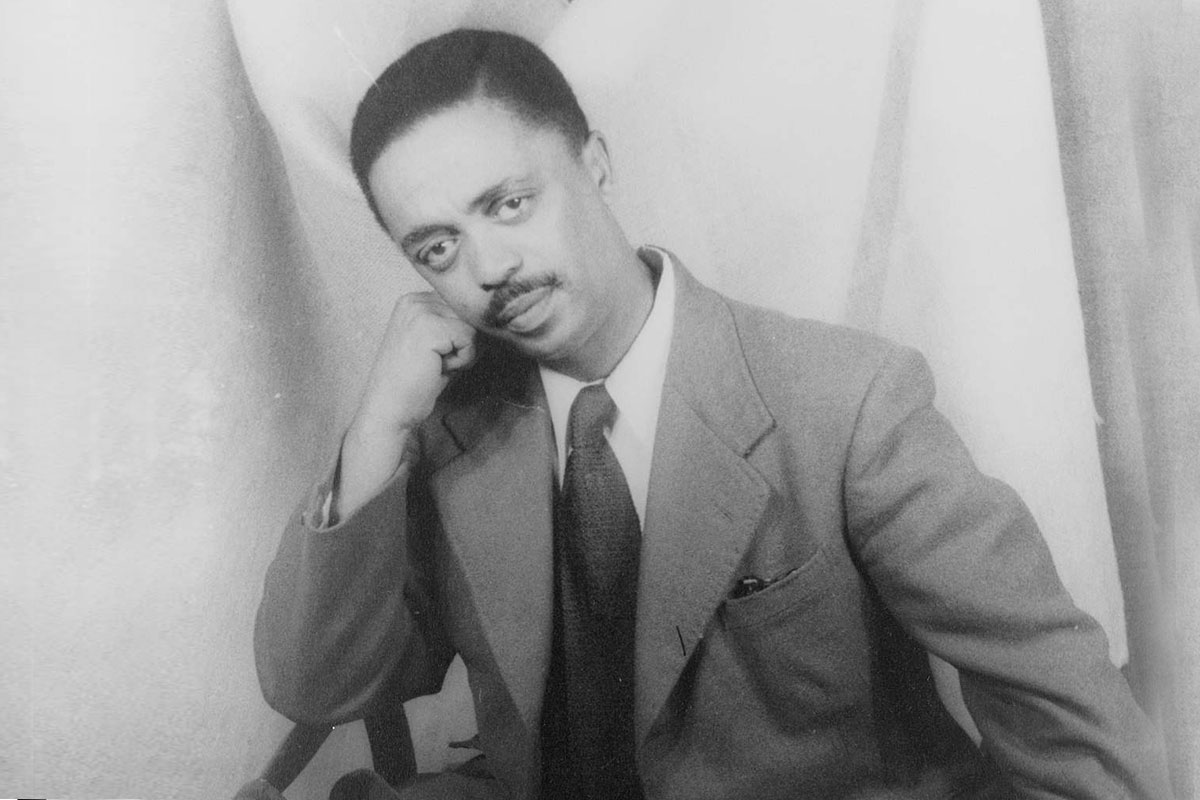
Peter Abrahams. Courtesy: Wikimedia Commons

The Accident of Aesthetic Education
(An excerpt from The Amateur)

Saikat Majumdar

The amateurs in this book shine the brightest when they appear as struggling, peripheral readers stumbling upon idiosyncratic, indeed deviant readings of canonical western texts. These are the strange moments when the enervating relation between metropolitan culture and colonial reality becomes enabling in the strangest possible ways. Mistakes, anxieties, and misgivings, for many of these thinkers, pave the future path to becoming intellectuals within public, often transnational spaces.

Is an intellectual with a public reach an amateur or a professional? Marjorie Garber responds to this question by saying there is, at the very least, an element of amateurism in the work of the popular intellectual which may very well be a post-professional performance, rather than an unprofessional one. Speaking about literature and the humanities more broadly on popular, more accessible forums involves a certain unlearning of disciplinary discourse – perhaps (though not always) even the deployment of a grounded, popular idiom reminiscent of the non-metropolitan, vernacular intellectual. But even within Anglo-American metropolitan culture, Garber reminds us, “intellectuals were, and still are, celebrated for their professional amateurism”. [i] In material terms, being an amateur has usually meant someone who works without an institutional affiliation, or at least without a regular one – which, Garber argues, accounts for a certain nostalgia for figures such as Kenneth Burke and Edmund Wilson, with the latter intriguingly becoming a key figure for one of the postcolonial amateur-public intellectuals in this book, Pankaj Mishra. While the desirability of amateurism continues to be a provocative issue in literary studies – more so given its not-too-distant memory of a troubled acquisition of status as a professional academic discipline – such examples, and many more of them, also continue to tell us that the amateur-professional dialectic will forever remain productively unresolved in the field.

*

A powerful case for the necessary and continued amateurism of the intellectual is made by Edward Said. For Said, amateurism implies disaffiliation with interests, lobbies, and institutions of power that seek to co-opt intellectuals to the hegemony of state and capital. Their amateurism is of a sharply polemical nature and is the precondition of the continuous vigilance for the preservation of their freedom and caution against bullying or absorption by the establishment. Said draws on Julian Benda’s notion of the intellectual as a passionate, fearless rebels who fight oppression and authority and defend the weak, even though, written in 1927, Benda’s idea also reveals the limitation of his time and keeps his list – which features Socrates, Jesus, Spinoza, Voltaire, Nietzsche – confined to men valorised in European culture. That an intellectual is not defined or limited by a particular discipline, for Said, is best illustrated by Michel Foucault’s construction of the “universal intellectual” as opposed to the “specific intellectual” who has increasingly come to replace the former figure. Said is passionate about the independent and adversarial status of the intellectual, and he feels the greatest threat to the integrity of the intellectual today comes not from the usual corridors of capitalist and state power and comfort, but from within, the attitude he calls “professionalism”, by which he means “thinking of your work as an intellectual as something you do for a living, between the hours of nine and five with one eye on the clock, and another cocked at what is considered to be proper, professional behavior – not rocking the boat, not straying outside the accepted paradigms or limits, making yourself marketable and above all presentable, hence uncontroversial and unpolitical and ‘objective’”. [ii]

Such approaches to the idea of the amateur go a long way to liberate the term from the indulgent dilettantism of feudal elites; it situates it within a field of resistance, disaffiliation, and nonconformance. Said himself is included, along with Charles Baudelaire, Fyodor Dostoevsky, Guy Debord, Hannah Arendt, and Jane Jacobs in a list of exponents of free and unusual wisdom, in the intriguing and delightful book, The Amateur: The Pleasures of Doing What You Love, by Andy Merrifield. [iii] Not unexpectedly, for Said, the great threats that diminish the power and integrity of the figure of the intellectual today are variously rooted in forms of professionalism, which articulates itself across various dimensions: the debilitating constrictions of academic and scholarly specialisation, the fetishisation of expertise and institutional certification that calls for correctness and cautious disciplinary territorialisation, and perhaps most damningly, the hard-to-resist drift towards power and authority, to support and even be in direct employ by its institutions. The great threat of professionalism can only be resisted by what Said calls amateurism, which replaces profit and narrow specialisation with the care and affection that must shape and drive the intellectual’s vocation. “The intellectual today ought to be an amateur,” he writes, “someone who considers that to be a thinking and concerned member of a society one is entitled to raise moral issues at the heart of even the most technical and professionalized activity as it involves one’s country, its power, its mode of interacting with its citizens as well as with other societies”. [iv] Beyond measured questions of profit and method, the intellectual must make her labour personal and daring. The question we are left with, as such, is rhetorical, with the answer already lodged in our intellectual and political conscience: “How does the intellectual address authority: as a professional supplicant or as its unrewarded, amateurish conscience”? [v]

Every period in English studies reinvents this question for itself. In her January 2023 review essay on John Guillory’s Professing Criticism, Merve Emre outlines Guillory’s narrative of the academic professionalisation of literary study in the twentieth century. But while professionalisation “secured intellectual autonomy for criticism’s practitioners”, enabling scholars to specialise in different periods, national traditions, themes, and even cultural artefacts, the cost of this autonomy has been influence, as the efforts of these scholarly specialisation have not spread far beyond the classroom at all. [vi] Scholarly rigour at the cost of public impact is a phenomenon easily recognised in the historical trajectory of literary criticism in the Anglosphere – and most of us in the academy would recognise it is as a necessary, even productive sacrifice. But this professionalisation brings a greater setback, which Emre correctly reads as a unifying thesis in Guillory’s book – that of professional deformation, which finds a strange, if partial resonance with Said’s suspicion of the professionalised intellectual and his subsequent championship of the amateur.

 *

The crisis in literary studies is now acute enough – particularly in the Anglo-American academic world – for the old misgivings about the deep professionalisation of literary study to resurface in new forms. Some of these anxieties, such as the loss of the popular appeal of traditional forms of literatures, are immediately recognisable, doubly aggravating in the age of instant digital culture and aesthetic gratification. Others, such as the debilitating employment crisis in academic humanities, seem to have taken an apocalyptic urgency not quite seen before despite several smaller warning signs through the last decades of the twentieth century. At such a moment, a celebration of the amateur reader might seem as galling to some as it might feel liberating to others. As Guillory points out, the rewards of non-institutional scholarship are dangerously low: “To be a freelance scholar, no matter the quality of one’s scholarship, is precisely to be excluded from the system of rewards.” But at the same time, it is difficult to see certain current conversations in the literary academy, notably those around the phenomenon of postcritique and the question of the lay reader, as disconnected to an attention to some of the virtues of amateur thought and reading. Guillory, too, has proposed a withering of sorts for cultural capital, by seeking to free literary criticism as a specialised activity structured after capitalist division of labor. The result might be the liberation of the producers of imaginative and intellectual labours in the Marxist vision of the communist organisation of society, where the work of writers, artists, critics, and thinkers, will belong to everybody who will engage in such production among other activities of the day.

 *

The most visible form of this drift is the increasing influence and popularity of varieties of cultural intervention by bloggers, social media participants, activists, and influencers, and experimental and interactive commentators such as writers of fanfiction, and the corresponding decline of the traditional guardians in the pages of newspapers, broadsheets, literary magazines, and awards. Increasingly, we dwell in a world where the traditional cultural capital that distinguished a leading newspaper review from one on Amazon or Goodreads (and interactive social media such as BookTok or Bookstagrammers for popular/mass-market books, on TikTok and Instagram respectively) continues to dwindle, particularly with younger constituencies. I think anyone who recognises the intellectual and imaginative uniqueness of literary discourse – and here the distinction between the “creative” and the “critical” is moot – finds this chaotic democratisation of utterance and criticism less than satisfying. But at the same time, it is difficult not to see, as noted by many above, that much has been lost from the relentless professionalisation of literary study in the academy, which, to a large extent, has modelled itself on knowledge-production in the hard sciences, a significantly misleading track for literary study. It is from this troubled space that I join the voices of several scholars who have variously foregrounded the many, if uneven, virtues of amateur or lay reading.

 *

I have personally sensed the enthusiasm around the idea of amateurism in the metropolitan academy, such as when in 2017 the journal New Literary History devoted a small cluster to amateur criticism which included an essay of mine that contained the germ of this project – “The Critic as Amateur”. [vii] Along with another contributor to that cluster, Aarthi Vadde, who has also written extensively about amateur criticism, particularly in contemporary and digital contexts, I edited a collection of essays, also called The Critic as Amateur, where many scholars, entrenched professionals all, offered a wide range of brilliant interventions on critical, scholarly, and readerly amateurism. For Derek Attridge, amateur pleasure in books is the essential precondition of professional reading, while Ragini Tharoor Srinivasan foregrounded the inspired amateurism of interdisciplinary cultural studies that defined her academic training. Tom Lutz offered a remarkable story of amateur literary Bildung, strikingly similar to some of the colonial and postcolonial amateurs I discuss in this book – but from within metropolitan culture, from the very provincial penumbra of the literary establishments of New York City. Melanie Micir gave us a spirited history of the role of the amateur sensibility in the history of the feminist press, while Kara Wittman, in the epilogue essay for the collection, read the undergraduate student as the amateur with the burden of saying something “new, interesting, and original”. And these are just a few of the chapters. [viii]

 *

The present book is a deeper examination of a history of amateur reading and criticism that does not coincide with the discipline’s academic history in any significant way – none of the thinkers examined here were professional academics – and yet, it is a history, that I feel, lies at an important angle to academic scholarship, and certainly to the larger idea and practice of literary criticism. Academic fields close to the themes in this book have derived genealogical energy from amateur debates. The most striking example is the exchange and argumentation with amateur historians writing for popular readership that shaped the work of historians such as Jadunath Sarkar and Govindrao Sakharam Sardesai as they sought to make history a proper academic subject in India. [ix] Cultures of lay reading, often by marginalised or minoritised groups have also variously entered academic debates in both historical and literary studies, and in more recent years, have led to renewed attention to the nonspecialist reader in the latter field. Apart from Jonathan Rose’s study of British working-class autodidactism, The Intellectual Life of the British Working Classes, I’m thinking of Janice Radway’s 1984 book, Reading the Romance: Women, Patriarchy, and Popular Literature, and more recently, Merve Emre’s Paraliterary: The Making of Bad Readers in Postwar America, both of which, in their own ways, significantly depart from the canons of high literature in the choice of their archives as much from the social groups who read them for affective or functional reasons of their own. [x]

 *

This book is not about lay, poorly educated, or “bad” readers as a sociological category, but rather some of the most inspiring practitioners of idiosyncratic non-specialist reading that is generative, perhaps particularly so, in its flaws and failures. Perhaps behind it is the belief that the most effective way to integrate the best practices of critical amateurism is to observe some of its most inspiring practitioners. And yet, my insistence on the uniqueness and particularity of literary discourse (and my scepticism about the growing digital influence of the citizen-reviewer) requires me to be attentive to readers whose amateurism is driven by striking imaginative and intellectual uniqueness of their own. Hence my focus on these figures, who, unlike the silent ordinary readers in Jonathan Rose’s book, have all left vivid and striking accounts of their reading and thinking about literature, which have variously shaped their own aesthetic education at odd angles from systems of imperial education within which they found themselves situated.

 *

At the same time, this is also a plea to examine this question beyond the limits of the Anglo-American world, through the reality of English as a language of world literature. The ironic centrality of British colonial education to the making of these adventurous autodidacts makes the English language my natural and primary archive, but this is in no way to suggest that that was the only language in which these figures conducted their reading lives. While Nirad C Chaudhuri read and wrote just as much in Bengali as in English, Toru Dutt’s connection with French literature was possibly deeper than her connection with English, along with the reading she did in Bengali and rudimentary Sanskrit. Peter Abrahams memorably chronicles his rich and troubling relation with Afrikaans literature as trapped between a beloved teacher and a history of racist nationalism, and Sindiwe Magona recollects early tremors of movement between Xhosa and English, and describes her later classroom challenges while teaching Afrikaans. The unique history of the Black and Brown diaspora in the Caribbean has left most writers there only with European languages and their creolised variations, and for the figures I read from that part of the world, English accounts for their primary reading and writing lives. Historically however, the global identity of the British Empire has been richly multilingual and deeply polyphonic. My focus on English in this book is, to a great extent, a gesture of offering unity to a large cultural and territorial expanse through my own scholarly expertise on world English.

 *

As a constellation of narratives about amateur reading that make up colonial and postcolonial programs of aesthetic education, this book is also an inquiry into the imperial history of literary humanities across the transcontinental expanse of the British empire.  As we look towards the future of reading culture and humanistic study, a long glance at its past – particularly as it has embodied itself under flawed, oppressive, and exclusionary structures of education – becomes a simultaneously sobering and enlightening experience. It is a look that I hope will reveal a different nuance to the textual relation between empire and colony, by revealing unexplored realms of what Dipesh Chakrabarty has called “the anticolonial spirit of gratitude”, to complicate larger patterns of cultural and material power with unique trajectories of individual imagination in ways only literature can. But I’m hopeful that the bungling acts of reading by these unforgettable peripheral readers(Chaudhuri, Dutt, Abrahams, Magona), as celebratory as resistant, unpredictably affirmative and eclectically suspicious, will offer some roadmaps for the present where the reading of older texts, particularly from metropolitan cultures, is, to a great extent, determined by the vigilance and suspicion of #cancelculture. In my greatest moment of optimism, I imagine these remarkable outliers as offering revolutionary possibilities for the future.

  • [i] Marjorie Garber, Academic Instincts (Princeton: Princeton Univ Press, 2001), 21
  • [ii] Edward W. Said, Representations of the Intellectual: The 1993 Reith Lectures (New York: Vintage Books, 1994), 74
  • [iii] Andy Merrifield, The Amateur: The Pleasures of Doing What You Love (London: Verso, 2017)
  • [iv] Said, Representations of the Intellectual, 82-83
  • [v] Ibid., 83
  • [vi] Merve Emre, “Has Academia Ruined Literary Criticism?” The New Yorker, 16 January 2023.
  • [vii]New Literary History, Volume 48, Number 1, Winter 2017
  • [viii]The Critic as Amateur, Eds. Saikat Majumdar & Aarthi Vadde (New York: Bloomsbury Academic, 2019)
  • [ix] Dipesh Chakrabarty, The Calling of History: Sir Jadunath Sarkar and His Empire of Truth (Chicago: The Univ of Chicago Press, 2015), 4-5.
  • [x] Janice Radway, Reading the Romance: Woman, Patriarchy, and Popular Literature (Chapel Hill: Univ of North Caroline Press, 1984), Merve Emre, Paraliterary: The Making of Bad Readers in Postwar America (Chicago: Univ of Chicago Press, 2017)
***

Excerpted from The Amateur: Self-Making and the Humanities in the Postcolony, published by Bloomsbury in the UK and the US, and forthcoming in other territories.

***

Saikat Majumdar’s most recent books are The Amateur, and a novel, The Remains of the Body (2024). He is the author of four previous novels, including The Firebird/Play House (2015/2017) and The Scent of God (2019); a book of criticism, Prose of the World (2013), a book on liberal education in India, College: Pathways of Possibility (2018), and a co-edited collection of essays, The Critic as Amateur (2019). He is Professor of English & Creative Writing at Ashoka University.

Categories
Symposium 3: Reassessments

The Treacherous Modern

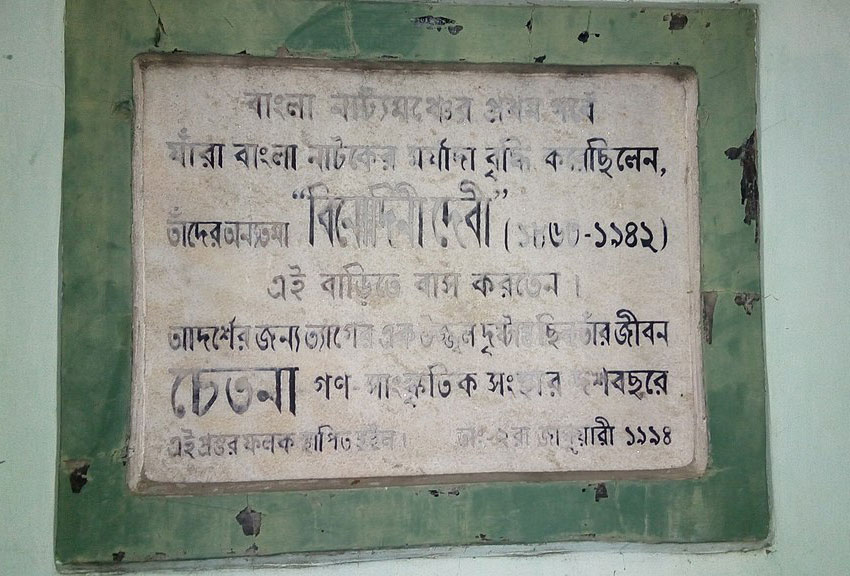
Original stone plaque on the house of the stage actress Nati Binodini, or Binodini Dasi (1863-1941), in Hatibagan, Calcutta. (Courtesy Wikimedia Commons)

The Treacherous Modern

Saikat Majumdar

Must the earliest experience of artistic representation be such a menagerie of the senses? ‘When you wet the bed first it is warm then it gets cold.’ Joyce’s Stephen Dedalus grasps life, at first, through sensations; time must pass before he can anything with abstract thought: ‘By thinking about things you could understand them.’

Sensations dominate. Is that why children like to draw? I did. The human form was sweet, slippery geometry till a teacher showed me how to infuse movement in muscles. The image of speed in the running boy was a great childhood milestone. And then signs of greater abstraction started to take over. Seeking to copy images from books, I would start to turn the pages, sucked into the story, forgetting the painting. A faraway narrative took me away from the immediate image.

One day in the teens my thick scrapbook of bright paintings emerged from a box under a bed, an army of caterpillars that became nothing.

In the end, words were safer. Not only were they quiet, but they offered the safety of an abstraction not visible to anyone. ‘He’s lost in a book,’ they would say, and leave me alone. Even when I started to write, it was far easier to hide it under the pretense of homework. You could not hide a painting.

Sensory art was spectacular, beautiful, and terrifying. My young mother trying to make a career in theatre, faltering, on stage and in her marriage. My child memory of watching her die in a cesspool of red light, youth-vision of her tied to the stake set to fire. Fight and gossip at home and in the neighborhood about what she could and she could not play, when in the evening she could go out, and when she couldn’t. My desire to grow up into an actor got buried in the fear of performance, in the vicious sound of quarrel, in the shame that drowned the stage.

Books were solitude, books were a hiding place. Reading made me anonymous, invisible.

I couldn’t have been more than ten when I came across an ornate, Sanskritic word for a woman’s breast in a novel by Bankim Chattopadhyay, in a description of rape and pillage by a village landlord. I had asked my grandmother – my mother’s mother – what the word meant. A curious smile glistened in her eyes. But without a fuss, she told me the meaning of the word, translating it into babyish Bangla. In the safety of books, no word was profane. Bankim babu, long a classic, had come a long way in a hundred years, from the time when girls had to hide his novels under their pillows lest someone caught them reading him.

Literature gave me solemnity, a weightiness of diction that misfired easily. I remember one twilight hour when my father left for an office trip and my mother spent several long minutes before the little shrine of gods and goddesses at home. After she finished praying and turned to me, I told her, with quiet and profound drama: ‘Father will never come back home again. Never again, mark my words.’ Sharply, she scolded me for such nonsense.

Why did I say something so stupid, words that sounded malicious even in the voice of a child? I’ve thought about it. I had realized that she was praying for the safety of her husband. I wanted to say something appropriate to the occasion. But I also wanted to say something dramatic, something that would conflict with the expected emotion of the moment. The fact that something would come across as ominous and painful almost became secondary to the need to sound oracular.

Literature built something around me. A safe space, an alternate home, a carapace? The private world kept fighting off everyone around, most of all those who wanted to come close. Is it strange that all my bookish memories are drenched in twilight? The sense of hours going by, the day gliding away, the colour of the sky darkening but not yet dark. I was nearing the end of A Tale of Two Cities, caught in the final emotional throes of the novel, when my mother asked me something. I snapped back, furious, fearful of losing the spell of the intense and frightful fictional world.

I was getting sucked deeper and deeper into the empowering solitude of literature. And the abstraction, the abstraction was crucial, because the reality around me was getting unbearable, more traumatic by the day. Solitude was also the reason why I did poorly in team sports such as cricket or soccer but excelled in more private games like ping pong and badminton, game for the nerds, as some say…

What got me into the high modernists in the last few years of high school? The beauty of their language, I thought at the time, with writerly aspirations beginning to come alive. The intensity of their sensory evocation sang through my body and struck a chord with the sensory overload that is every moment of life in an Indian city. That chord, not fully understood at that time, initiated my life in fiction, beginning with sketches of metro stations and city buses, of the odd habits of bus-conductors and squeegee boys, frozen, slow or messed up in time, expansive in space, much the way modernist poetry and fiction looked, felt like.

In college in St. Xavier’s, I entered the classroom of a poet-critic-publisher who had fought at the front lines of the battle that sought to make English believable as a language of Indian literature through decades of post- independence polemic. P. Lal made English a language of my literary dreams, etched the anxieties of tradition from T.S. Eliot to Vyasa, and published my first collections of short stories and novellas from Writers’ Workshop, the publishing house he had created. Rohinton Kapadia taught Joseph Conrad with the kind of care that would set a lasting pedagogic example. He introduced us to Conrad critics such as Albert Guerard and Ian Watt, and many years later, when I would join the English faculty at Stanford, where these two scholars were cherished as former members, the warmth of Professor Kapadia’s classroom would flood back to me. Partha Mukherjee set the trend for Joyce – no matter how much time I would spend with the author later in my life, his reading of ‘Araby’ set a defining rhythm to my approach to the author’s evocation of Dublin. Modernism was now a defining part of my bildung, as a reader and as a writer, as someone who wanted to see and feel the world and recreate it in his own way. I was keen to get started on that momentously titled book, A Portrait of the Artist as a Young Man.

In Calcutta, books circulated far beyond the conventional channels of publishing; piracy, and sometimes the xeroxing of whole books achieved in the 1990’s what free downloading websites would achieve in the 21st century. It was through this ‘unofficial’ network of distribution that I first got my hands on Amit Chaudhuri’s A Strange and Sublime Address. That novel, and his second, Afternoon Raag, brought home the most perfect embodiment of modernist sensuality in locally realized Indian life that I could have imagined at that crucial moment of my life as a reader and writer.

I met with Chaudhuri in Calcutta, and he was to become Amitda soon after. Beyond sharing passion for Lawrence, Joyce, Mansfield, Woolf and other modernists, Amitda articulated his unease with the dominance of the national allegory that raged through the postcolonial world in the ‘80’s and ‘90’s, and the angularity of his own position as a novelist to that dominant tradition. These conversations would stay with me, help me define my own location as a fiction writer, and several years later, would shape the writing of a book that I would call Prose of the World: Modernism and the Banality of Empire.

Poets and writers like Chaudhuri and P. Lal, all in very different ways, shaped a living, working tradition of literature around me, of Indian literature written in English. But there was a longue durée tradition of which I felt a part, or perhaps just wanted to be, that extended to the modernists, as I imagined it did for Chaudhuri, Lal, and many other practitioners of Indian literature in English who were already part of literary history. At Jadavpur University for my M.A., I could have become an early modernist but the claim of modernism, in the end, would not be subordinated. Shakespeare floated over Jadavpur like a deeply intoxicating mist – in the passionate, humanist pedagogy of Sukanta Chaudhuri, the caustic blend of classicism and New Historicism offered by Swapan Chakravarty, the deconstructive approach of Supriya Chaudhuri, the performative poetics of Ananda Lal. But I finally read A Portrait of the Artist as a Young Man, and the most overwhelming need was to linger within an available, and practicable, tradition of fictional craft. Quieter lessons from my mother’s brother, Arup Rudra, who taught modern European literature and theatre in the same department, left softer imprints that proved secretly indelible. His translation of Jean Anouilh’s L’Alouette, with the title ‘The Bird of Fire’ in Bengali, would haunt me in many different ways till, many years later, I would write a novel with the soul of a play.

But at that time, I wrote about Calcutta buses the way I thought Woolf wrote about marks on the wall, Joyce about the alleys of Dublin – even as I dreamt of fleeing the city. But when I got away, Bowling Green, Ohio, turned out to be a flat nightmare, and a disembodying blank after the powerless multitude of Calcutta. I wrote formless short stories under the tutelage of Wendell Mayo, short story writer who loved Joyce and Ingmar Bergman, and Anthony Doerr, who would go on to win the Pulitzer a few years later with his novel All the Light You Cannot See. The MFA workshops were a daily struggle of understanding with my peers, all from the surrounding states of Michigan, Pennsylvania, Indiana – of Raymond Carver vs Joyce, of minimalism vs modernist lyricism, a tussle that leaves me embarrassed today.

But my longing for modernism needed a critical idiom. Making sense of myself as a reader and a writer, needed, for as long as I remember, criticism and scholarship as much as the practice of craft. That I got when I started working with Derek Attridge at Rutgers. Doctoral work was a large expansion, of the immediacy of literary modernism into the larger philosophical context of Enlightenment modernity, a tale of crisis and continuity. The soft easing of modernity into modernism – the celebration of eventless, quotidian life, the tedium of bureaucracy, the culture of flânerie and the colonial cityscape – much of these would energize the first book of criticism that I would write several years later, Prose of the World. But Derek would somehow push my love for Joyce into an appreciation of J.M. Coetzee, and I always think of my first novel, Silverfish published a few years before Prose of the World, caught in the midst of this back-and-forth journey – Joyce to Coetzee and back to Joyce again. Like the critical book, the novel, too, was a celebration of the landscape of modernity in the idiom of modernism, but it was also energized by the attempt of South Asian historians to retrieve a different language, that of minoritized voices lost to institutionalized narratives of history. Roaming the battered streets of Communist-ruled Calcutta and battling a corrupt bureaucracy to get his long-overdue pension, a retired schoolteacher reads a manuscript, the lost fragments of the memoir of a woman from colonial Bengal. The echoing of their tragedies became the subject of the novel.

Why do reassessments happen? Why are we pushed to rethink our relationship with books, traditions, forms of experience? One day, the American novelist Fae Myenne Ng told me, ‘The first five years are all you need.’ The first five years of life can shape an entire life of fiction-writing. It jolted me, and sought to stir something inside. But it was the experience of becoming a parent for the first time that took me back to the primal fears and joys and terrors and bewilderments of my own childhood. Parenthood, that terrible mess of screwed body clock and unruly body fluids and sleepless bitterness and inside-melting love, was one of the starkest disruptions of a clean and sensible life that I could remember since my own cloudy and traumatic childhood. It was a sudden call to break through the protective shell of abstraction that had grown around me, perhaps since the days when I slipped away from sensory forms such as painting and theatre to the rarefied symbolism of language. Quietness and solitude shattered inside my head like nothing before; privacy and isolation were ravaged in ways no adult could have done. Six months after the birth, I wrote this sentence: ‘Disaster came early in Ori’s life, at the age of five, the first time he saw his mother die.’ What happens when you are five years old and see your mother die on stage? What terror grips you, what tears?

The story of a young boy’s obsessive relationship with his mother’s life as on the theatre stage, The Firebird (published as Play House in the US) was the eruption of the primal, the irrational, the jaggedly sensory in my life – everything that would gash through the calmer narrative of quotidian modernity that had become my mainstay, and which I had celebrated in my first novel and my first book of criticism. It was, as it were, the rude appearance of the nonmodern in an artistic and intellectual life of modern equipoise. There was a narrative of modernity that I had accepted too easily in that life – the passage of the communal, sensory and the performative to the quite, solitary, and the linguistically abstracted. The oversimplification was mine no doubt, but mine it was indeed, and I had staked life and imagination on it. It took me almost five years to complete this novel with the soul of a play, but when it came out, I felt I had regained the performative and the multi-sensory in my artistic life much in the way I had sought to push them away when I stopped painting, and recoiled in terror from the darkness of the wings around the stage where my mother stood in a tiny pool of light.

Was my reassessment of modernity also a reassessment of my long obsession with literary modernism? Perhaps not, for what else did I have through which to invite the nonmodernity of performance, of violated kinship, but language itself, the modernist language that panted and foamed at the mouth to describe experience at the brink and beyond of language? Language that fell short joyously, in bruised delight? When I sought to describe the unsettling awakening of desire in a boys’ boarding school and their tentative experimentation with each other’s bodies, unmindful of terms such as straight and queer, some queer activists found the novel seeking to hush-hush queer desire under a heteronormative frame. But while The Scent of God, published a few months after the Indian Supreme Court’s decriminalization of homosexuality in September 2018, got caught up in a newfound celebration of queer literature, I saw, to a great extent, the flaws in my own binarization of the modern and the nonmodern. Encased in the ancient sensuality of Hinduism, this novel evoked the ambience of a monastic order framed in the swirl of the Bengal Renaissance, that great movement of colonial modernity. The abstract and the concrete were no stark binaries either, as some readings of the Enlightenment would have us believe. When does the ultimate abstract, God, give out a sensory scent?

Time has passed. The firstborn is now eleven. That eruption of that visceral experience has softened into the wonder of growth, both slow and fast, of the body, mind, and personality. What are the fears of a father who awaits a daughter becoming a woman? What odours, what phrases, what frowns and glances? This time, I choose a myth, an old story of mentorship that went to rot. The guru who took the pupil’s thumb as a honorarium only to have him do wonders with his middle finger. Is the modern an endless craving for the new? Or a reassessment of the old? Is the postmodern the digital remastering of the ancient? The Ekalavya story as a contemporary campus novel awaits daylight, as I slowly come out of a stark, adversarial reassessment of modernity that had fallen upon me, once upon a birth. The treacherous ellipsis of literary modernism is here to stay.

Saikat Majumdar is the author of three novels, The Scent of God (2019), The Firebird/Play House (2015/2017), and Silverfish (2007); a book of criticism, Prose of the World, a nonfiction, College, and a co-edited collection of essays, The Critic as Amateur. He writes a column in the Los Angeles Review of Books, Another Look at India’s Books, which discusses books from India that have escaped popular and critical attention. His new novel, The Middle Finger, will be published in January 2022